Looking for a fast, discreet energy boost in 2025? Caffeine chew pouches have become the go-to solution for busy people who want a convenient way to stay alert without the hassle of brewing coffee or dealing with spills.
This comprehensive guide explains everything you need to know about caffeine chew pouches, including how they work, their benefits, and the safest ways to use them.
With more people seeking alternatives to traditional caffeine sources, these pouches are gaining popularity for their portability and ease of use. Imagine getting a smooth, steady lift with no mess and no noise—perfect for work, travel, or study.
Keep reading to learn what caffeine chew pouches are, how they compare to energy drinks and coffee, the key benefits and risks, tips for safe use, leading brands, and how to choose the right pouch for your lifestyle.
What Are Caffeine Chew Pouches?
Caffeine chew pouches have quickly become a standout choice for those seeking a fast, convenient energy boost. These innovative products combine portability, discretion, and simplicity, making them an appealing alternative to traditional caffeinated drinks or supplements. But what exactly are they, and how do they fit into the expanding world of energy solutions?
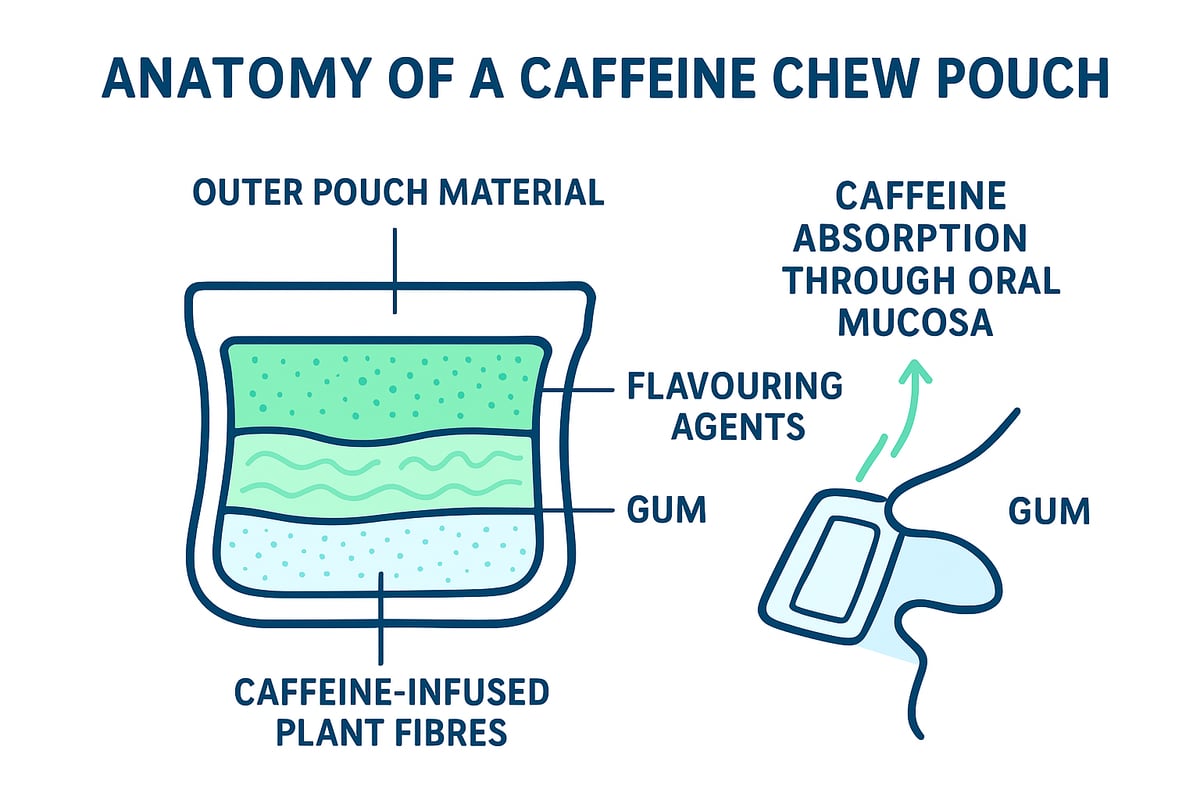
Definition and Composition
Caffeine chew pouches are small, soft sachets filled with a precise dose of caffeine, usually blended with plant fibres, flavourings, and sweeteners. Unlike caffeinated chewing gum or drinks, these pouches are designed to be placed between the gum and upper lip, allowing caffeine to absorb directly through the mouth’s lining. This method distinguishes them from both nicotine pouches and traditional chewing gum, as they are entirely nicotine-free and do not require chewing.
Most caffeine chew pouches contain minimal sugar and no tobacco, offering a cleaner profile for health-conscious users. For a comprehensive overview of the different varieties available, you can browse the Caffeine Pouch Collection UK, which showcases the latest blends and brands.
How Do They Work?
The mechanism behind caffeine chew pouches is oral absorption. When the pouch is placed in the mouth, caffeine diffuses through the gum tissue and enters the bloodstream rapidly. This process typically leads to a quicker onset of effects compared to drinking coffee or energy drinks, as it bypasses the digestive system.
Most users report feeling energised within 5 to 15 minutes. The effects can last from 30 minutes to over an hour, depending on the pouch’s strength and the individual’s metabolism. This rapid delivery system suits those who need a prompt lift without waiting for a beverage to take effect.
Types and Flavours Available
Caffeine chew pouches are available in a wide array of flavours and strengths to suit different preferences. Common flavours include:
- Mint (peppermint, spearmint)
- Fruit (watermelon, berry, citrus)
- Coffee or mocha
- Exotic blends (tropical, herbal)
Strength varies, with options ranging from low (20–40mg) to high (100mg or more) caffeine per pouch. This variety makes it easy to find a pouch that matches your taste and energy requirements.
Legal Status and Age Restrictions
The legal status of caffeine chew pouches varies by country. In the UK and EU, these products are regulated as food supplements, requiring clear labelling and safe ingredient lists. The minimum age for purchase is typically 18, reflecting concerns about caffeine’s impact on younger users.
Packaging must meet strict standards for child safety and ingredient transparency. In the US, regulations are similar, with additional state-level restrictions in some areas. Always check local guidelines before purchasing or using these products.
Popularity Trends in 2025
Caffeine chew pouches have experienced significant market growth in 2025, with UK sales rising by over 30% year-on-year according to industry data. Their popularity is particularly strong among university students, busy professionals, and athletes who value convenience and portability.
Demographic trends also reveal increased adoption among shift workers and commuters. The demand for discreet, on-the-go energy solutions is expected to keep climbing, as more consumers seek alternatives to traditional caffeinated beverages.
Caffeine Pouches vs. Other Caffeine Sources
To help you compare caffeine chew pouches with other popular caffeine sources, see the table below:
| Product | Caffeine Content | Convenience | Health Impact |
|---|---|---|---|
| Caffeine Chew Pouch | 20–100mg | High | Sugar-free, low calorie |
| Coffee | 60–120mg | Moderate | May stain teeth, acidic |
| Energy Drink | 80–160mg | Moderate | Often high sugar, additives |
| Caffeine Pill | 50–200mg | High | No flavour, risk of overuse |
Caffeine chew pouches stand out for their portability, sugar-free composition, and ability to deliver energy without the need for preparation or added calories.
Who Are They For?
Typical users of caffeine chew pouches include:
- Shift workers needing alertness during long hours
- Athletes seeking a quick pre-workout boost
- Students preparing for exams or late-night study sessions
- Travellers combating fatigue
These pouches are especially useful in scenarios where traditional caffeinated drinks are impractical, such as during commutes or in professional settings. With their discreet format and rapid effect, caffeine chew pouches offer a tailored solution for modern energy needs.
Key Benefits and Potential Risks of Caffeine Chew Pouches
Caffeine chew pouches have rapidly gained popularity as a convenient and discreet way to boost energy. Like any supplement, these pouches offer a mix of benefits and risks that users should weigh carefully. Understanding how caffeine chew pouches work can help you make informed decisions about their use and suitability for your lifestyle.
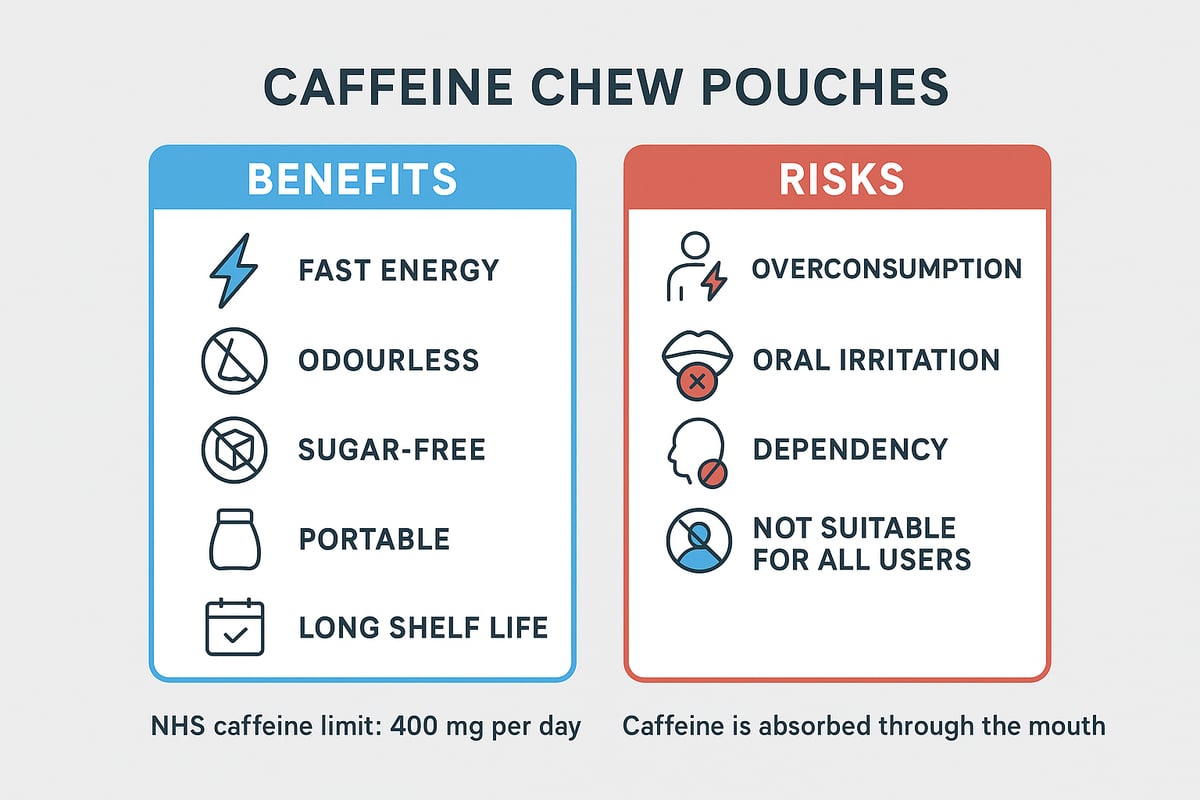
Main Benefits
Caffeine chew pouches deliver a fast and reliable energy boost, often within minutes of use. Their oral absorption method allows caffeine to enter the bloodstream efficiently, offering a quicker onset than traditional coffee or energy drinks.
Other notable benefits include:
- Discreet and portable: Small, odourless, and easy to use anywhere, whether at work, in class, or on the move.
- Sugar-free and low-calorie: A healthier alternative to many energy drinks, which are often loaded with sugar.
- No brewing or mixing: Simply place the pouch under your lip and go.
- Reduced risk of stained teeth: Unlike coffee, caffeine chew pouches do not discolour enamel.
- Long shelf life: Most products remain fresh for up to a year unopened.
For example, commuters find caffeine chew pouches ideal for early morning journeys, providing a subtle pick-me-up without the hassle of carrying a hot drink.
Health and Safety Considerations
Responsible use of caffeine chew pouches is essential for safety. The NHS recommends a maximum daily caffeine intake of 400mg for healthy adults. Since caffeine is absorbed through the gums, it bypasses the digestive system, which may reduce gastrointestinal discomfort compared to coffee.
Additional health and safety factors include:
- Fewer additives: Most caffeine chew pouches are free from excessive preservatives and artificial colours.
- Cleaner oral delivery: With less contact with tooth surfaces, the risk of staining is reduced.
- Scientific backing: Studies show oral caffeine absorption is effective and can offer steady energy without a sudden crash.
Always check product labels for caffeine content, and follow usage guidelines to minimise health risks.
Potential Side Effects and Risks
Despite their advantages, caffeine chew pouches are not risk-free. Overconsumption can lead to symptoms like insomnia, palpitations, and anxiety. Some users may experience mild oral irritation, especially with frequent use.
Risks include:
- Not suitable for children, pregnant women, or those sensitive to caffeine.
- Possible dependency: Excessive intake over time may lead to reliance on caffeine for normal functioning.
- Reported side effects: Surveys indicate that around 15% of new users report mild symptoms such as jitteriness or nausea.
For a comprehensive look at the risks and rising popularity of caffeine chew pouches, see this article on Caffeine pouches: fast energy with hidden risks.
Myths and Misconceptions
There are several misconceptions about caffeine chew pouches. Firstly, they do not contain nicotine, so they are not addictive in the same way as nicotine pouches. Secondly, when used as directed, the risk of oral health issues is minimal.
Legality is another area of confusion. While caffeine chew pouches are legal in many countries, regulations and age restrictions can vary, so always check the rules in your area.
Who Should Avoid Them?
Certain groups should not use caffeine chew pouches. People with heart conditions, high blood pressure, or sensitivity to caffeine are at higher risk of adverse effects. Children and teenagers under 18 should steer clear, as should anyone taking medications that interact with caffeine.
If you fall into any of these categories, consult a healthcare professional before considering caffeine chew pouches.
How to Use Caffeine Chew Pouches: Step-by-Step Guide
Using caffeine chew pouches correctly ensures you get the best results while minimising risks. This guide walks you through each step, from choosing your first pouch to recognising side effects and combining with other caffeine sources.
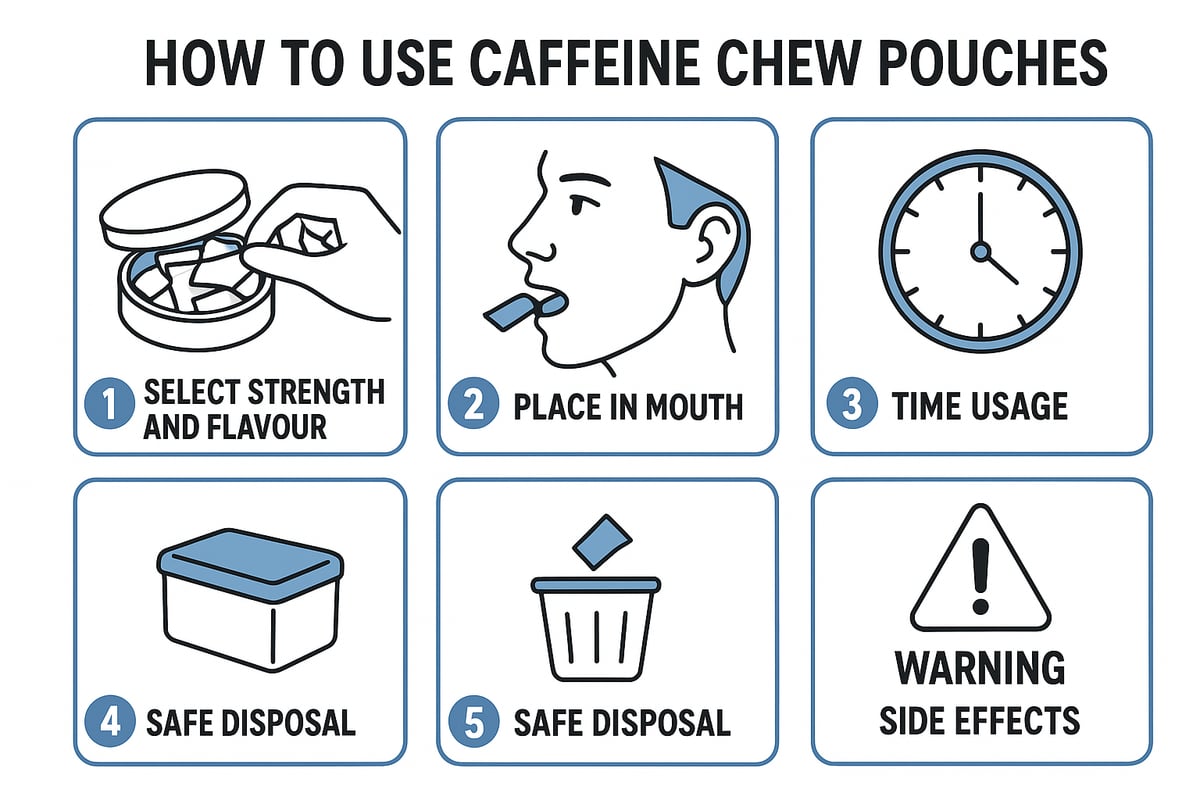
Step 1: Choosing the Right Strength and Flavour
Start by assessing your personal caffeine tolerance. If you are new to caffeine chew pouches, opt for a lower strength, typically 40–60mg per pouch, to avoid unwanted effects. Review your daily caffeine intake from other sources before making a choice.
Flavour plays a major role in user experience. Popular options include mint, fruit, coffee, and exotic blends. Many users find that starting with a familiar flavour helps them adjust to caffeine chew pouches more easily.
Consider whether you prefer a soft, moist pouch or a drier texture. Beginners often benefit from softer pouches, which feel more comfortable in the mouth. Always check product labels for caffeine content and ingredients.
Step 2: Proper Placement and Usage
To use caffeine chew pouches effectively, place one pouch between your gum and upper lip. Do not chew or swallow the pouch. The caffeine is absorbed directly through the oral mucosa, which allows for rapid onset of effects.
Leave the pouch in place for about 15–30 minutes. You may feel a tingling sensation as the caffeine is released. After use, remove the pouch and dispose of it responsibly. This method is discreet, odourless, and suitable for use in most public settings.
Proper placement is important for both comfort and efficiency. Try to avoid moving the pouch around too much, as this can cause irritation or uneven absorption.
Step 3: Dosage and Frequency
It is important to manage your intake of caffeine chew pouches to stay within safe daily limits. For most adults, the NHS recommends a maximum of 400mg of caffeine per day. Depending on the strength of your chosen pouch, this usually means using no more than 3 to 5 pouches daily.
Space your doses throughout the day to prevent caffeine spikes, which can lead to jitters or sleep disturbances. Track your total caffeine intake, especially if you also consume coffee, energy drinks, or supplements.
If you are unsure how much caffeine you are getting, create a simple log or table to monitor your consumption and avoid accidental overuse.
Step 4: Storing and Disposing of Pouches
Store caffeine chew pouches in a cool, dry place to maintain freshness and potency. Most pouches have a shelf life of up to 12 months if left unopened. Check the packaging for expiry dates and reseal containers after each use.
Dispose of used pouches in a waste bin. Do not flush them down the toilet, as this can harm plumbing and the environment. If you use pouches at work or on the go, consider carrying a small container for used pouches until you can discard them properly.
Proper storage also prevents accidental access by children or pets, reducing the risk of unintended ingestion.
Step 5: Recognising and Managing Side Effects
Be aware of the signs of overuse when using caffeine chew pouches. Common symptoms include jitteriness, increased heart rate, nausea, and difficulty sleeping. If you notice any of these effects, remove the pouch immediately and drink water to help your body process the caffeine.
More severe symptoms, such as chest pain or persistent palpitations, require medical attention. Listen to your body and adjust your usage accordingly. Many side effects can be avoided by starting with a lower dose and increasing gradually as your tolerance develops.
If you experience oral irritation, try switching to a softer pouch or limiting the duration of use.
Step 6: Combining with Other Caffeine Sources
Avoid using caffeine chew pouches in combination with high-caffeine drinks or supplements. Monitor your total daily intake, as excessive caffeine can lead to negative health effects. The cumulative effect of multiple sources can be greater than expected.
Scientific research, such as this systematic review on the effects of caffeine chewing gum, highlights how oral caffeine absorption can impact performance and alertness. These findings reinforce the need to be mindful when combining products.
If you are unsure about your limits, consult a healthcare professional for personalised advice.
Step 7: Tips for First-Time Users
If you are new to caffeine chew pouches, start slow and monitor your body’s response. Avoid using pouches late in the day to reduce the risk of sleep disturbances. Keep all products out of reach of children and pets.
Check labels for allergens or ingredients that may not suit your dietary needs. Read user reviews to find brands and flavours that suit your preferences. Gradual introduction helps ensure a positive experience.
Experiment with different strengths and flavours to discover what works best for you.
Leading Caffeine Chew Pouch Brands and Products in 2025
The market for caffeine chew pouches has seen remarkable growth in 2025, with new brands entering the scene and established names expanding their ranges. These innovative pouches offer a convenient, discreet way to boost energy, making them a preferred choice for busy professionals, athletes, and students. For a comprehensive overview of the most reputable and widely available options, visit Leading Caffeine Pouch Brands.
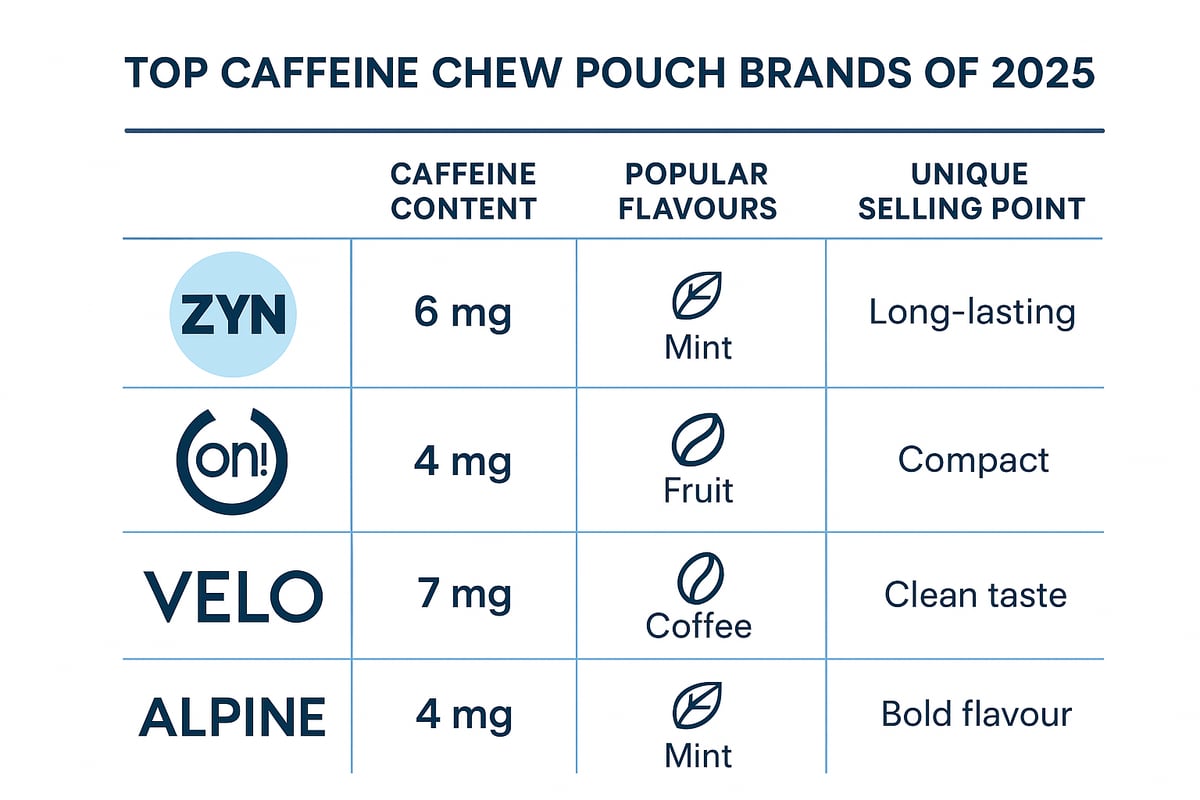
Top Brands Overview
In 2025, several standout brands have shaped the caffeine chew pouches landscape. Velo and ZYN, known for their experience in pouch delivery systems, have expanded into caffeine offerings. Iceberg Energy is praised for high-strength options, while Grinds focuses on authentic coffee flavours. Rush Energy appeals to those seeking exotic blends and maximum convenience. Each brand brings unique strengths, whether it's flavour diversity, strength range, or innovative packaging.
Brand Comparison Table
Choosing between caffeine chew pouches often comes down to flavour, strength, and value. The table below summarises the key differences among leading brands:
| Brand | Caffeine per Pouch | Flavour Range | Price (per can) | Availability |
|---|---|---|---|---|
| Iceberg Energy | 75mg | Mint, Fruit, Coffee | £5.50 | Online, Shops |
| Grinds | 50mg | Coffee, Fruit | £6.00 | Online |
| Velo | 60mg | Mint, Berry | £4.50 | Shops, Online |
| ZYN | 40mg | Mint, Citrus | £4.00 | Shops, Online |
| Rush Energy | 100mg | Exotic Blends | £7.00 | Online |
This comparison helps users quickly identify which caffeine chew pouches match their preferences and needs.
Popular Products and Flavours
The best-selling caffeine chew pouches in 2025 reflect the desire for both classic and adventurous tastes. Popular choices include Watermelon Mint, Strawberry Mango, and Coffee Kick. Customers frequently praise the strong, fresh taste of Iceberg Energy’s Mint, while Grinds’ Coffee Kick is a favourite among coffee enthusiasts. Rush Energy’s exotic blends continue to attract those seeking something different.
- Watermelon Mint (Iceberg Energy)
- Strawberry Mango (Rush Energy)
- Coffee Kick (Grinds)
These flavours have received high ratings and positive reviews for both taste and effectiveness.
Pricing and Value for Money
Caffeine chew pouches are competitively priced, typically ranging from £4 to £7 per can in the UK. Many brands offer multi-buy discounts or bundle deals, which can reduce the cost per pouch. Compared to bottled energy drinks or coffee shop visits, pouches provide a cost-effective and portable solution. Packaging is often resealable and designed for discreet, everyday use, helping to maintain freshness and convenience.
Where to Buy Caffeine Chew Pouches
You can find caffeine chew pouches at specialist online retailers, select convenience stores, and some high-street shops. Online platforms often provide the widest selection and exclusive deals. To ensure authenticity, check the packaging for proper labelling and buy from reputable sellers. Always confirm the product’s shelf life and look for customer service options such as fast delivery and clear return policies.
SnusBox: Premium Caffeine Pouch Selection
SnusBox offers a curated range of caffeine chew pouches, including Iceberg Energy, and stands out for its competitive pricing and reliable UK delivery. The platform provides educational resources to help users make informed choices, making it a trusted destination for both new and experienced users. With exclusive deals and a focus on authenticity, SnusBox is ideal for anyone seeking quality and variety in caffeine chew pouches.
How to Choose the Best Caffeine Chew Pouch for You
Selecting the right caffeine chew pouches is a personal process. With so many products and brands on the market, it is important to evaluate your needs and preferences carefully. The following guide walks you through key factors to consider, ensuring you find caffeine chew pouches that fit your lifestyle and provide the desired energy boost safely.
Assessing Your Caffeine Needs and Sensitivity
Begin by assessing your current caffeine intake and overall sensitivity. Track how much caffeine you consume daily from coffee, tea, soft drinks, or supplements. For many users, caffeine chew pouches offer a controllable alternative, but the ideal strength varies.
Consider your health status. If you have heart conditions or are sensitive to caffeine, consult your GP before trying caffeine chew pouches. Athletes may prefer higher doses for endurance, while office workers might opt for moderate strengths. Remember, each person metabolises caffeine differently, so start conservatively.
Flavour, Texture, and Mouthfeel Preferences
Flavour is a major factor when choosing caffeine chew pouches. Popular options include mint, fruit blends, and coffee-inspired varieties. Some brands offer unique combinations such as watermelon mint or tropical fruit.
Texture and mouthfeel also influence satisfaction. Pouches range from soft and moist to dry and firm. Customer feedback frequently highlights comfort and aftertaste, so try a few types to discover your preference. Enjoyment of the flavour and texture can make a significant difference in your daily routine.
- Mint: Refreshing and crisp
- Fruit: Sweet and tangy
- Coffee: Rich and robust
Strength and Dosage Considerations
Caffeine chew pouches come in a range of strengths, typically from 20mg to over 100mg per pouch. Beginners should start with lower strengths (20-40mg), while experienced users may prefer higher doses. Always check the label for accurate content.
Below is a comparison table for reference:
| Strength | Caffeine (mg) | Recommended For |
|---|---|---|
| Low | 20-40 | New users, light boost |
| Medium | 50-75 | Regular users |
| High | 100+ | Experienced users |
Avoid starting too strong, as high doses can cause side effects. Monitor your body's response and adjust accordingly.
Brand Reputation and Quality
Choosing reputable brands is vital for safety and satisfaction. Look for caffeine chew pouches from companies that use third-party lab testing and publish ingredient lists. Customer reviews are valuable for gauging product consistency and flavour quality.
Certifications and transparent sourcing can help ensure you are not purchasing counterfeit or unregulated products. For more on potential health risks and regulatory issues, see this article on health concerns associated with caffeine pouches. Prioritise brands with a strong reputation in the market for peace of mind.
Price, Packaging, and Value
Evaluate the cost per pouch compared to other caffeine sources like energy drinks or coffee. Most caffeine chew pouches are priced between £4 and £7 per can in the UK. Bulk discounts and bundle offers can provide better value if you plan to use them regularly.
Packaging matters, too. Resealable and discreet containers are ideal for portability and freshness. Eco-friendly packaging is becoming more popular for those who value sustainability.
- Look for multi-buy deals
- Consider shelf life and storage
- Review packaging for ease of use
Availability and Delivery Options
Caffeine chew pouches are widely available online and in specialist shops. Online retailers often offer the largest selection and competitive prices. Check delivery speeds, return policies, and customer service ratings before purchasing.
Availability can vary by region, so confirm that the product you choose is legal and can be shipped to your location. For those in the UK or EU, consult retailer guides or regulatory resources to ensure compliance with local laws.
Selecting the right caffeine chew pouches is about balancing your needs, health, flavour preferences, and budget. Take your time to explore options and review feedback to make an informed choice.
Frequently Asked Questions About Caffeine Chew Pouches
Curious about how caffeine chew pouches fit into your lifestyle? Here, we answer the most common questions, helping you make informed choices about these popular energy products.
Are Caffeine Chew Pouches Safe?
For healthy adults, caffeine chew pouches are generally considered safe when used responsibly. The NHS recommends keeping total daily caffeine intake under 400mg. Most pouches offer controlled doses, reducing the risk of accidental overconsumption compared to drinks. However, those with heart issues, high blood pressure, or caffeine sensitivity should avoid them. Always check the label and consult your healthcare provider if unsure. Remember, moderation is key for all caffeine chew pouches.
How Much Caffeine Is in a Pouch?
Caffeine chew pouches typically contain between 20mg and 150mg of caffeine per pouch. The exact amount depends on the brand and product strength. Always read packaging carefully to understand your intake. Beginners should start with lower-strength options to assess tolerance. Tracking your total caffeine from all sources, including coffee and energy drinks, ensures you do not exceed safe limits. If in doubt, choose products with clear labelling for caffeine chew pouches.
Can You Use Them While Driving or Working?
Yes, caffeine chew pouches are designed for use in a variety of settings, including while driving or at work. They do not impair alertness or motor skills, making them suitable for professionals and shift workers. Their discreet, odourless form allows for subtle use without drawing attention. As with any stimulant, avoid overuse, especially if you combine caffeine chew pouches with other caffeinated products during demanding tasks.
Do They Affect Sleep?
Caffeine chew pouches can impact sleep if used late in the day. The half-life of caffeine is around five hours, meaning its effects linger for several hours after consumption. To minimise sleep disruption, avoid using caffeine chew pouches in the evening or before bed. Shift workers and students should plan their intake to support alertness without sacrificing rest. Listen to your body and adjust timing as needed for optimal results.
Are They Legal in the UK and EU?
Caffeine chew pouches are legal in the UK and most EU countries, provided they meet specific regulations on ingredients, labelling, and age restrictions. Users must be at least 18 years old to purchase or use these products. Packaging must display caffeine content and safety warnings. For a detailed breakdown of rules and recent changes, see this helpful resource on the Pouches Legal Status in EU. Always check local guidelines before buying caffeine chew pouches, especially when ordering online.